


How We Got Here

It’s often useful to take a minute to stop and think: how on earth did we get here? “Here” meaning a complete wasteland of a culture that celebrates diversity on the altar of free speech. “Here” meaning a loss of principles and standards that made western civilization the beacon of light in the world. “Here” meaning a totally overfunded government that has fundamentally become utterly lost in its goals, mission and its principles. “Here” meaning, worst of all, the west on the brink. On the brink of teetering off the cliff of economic prosperity and individual freedom, plunging us all into a freefall of who the hell knows what.
As a result, there’s a crescive and noticeable underbelly of people that permeates throughout the towns and cities of England who are becoming, by the day, more and more fed up with the place they call home. Or of course, the place they once called home for the many jetting off to wherever the hell they can find refuge from the insidiously becoming totalitarian British state. As The Telegraph notes:
On August 4 last year, Sir Keir Starmer, the newly elected Prime Minister, began his statement on the riots by saying, “I utterly condemn the far-Right thuggery we have seen this weekend.” In conclusion, he added, “I won’t shy away from calling this what it is: far-Right thuggery.”
That there was far-Right thuggery involved in some of the protests was clear to see. But what Starmer failed to do was acknowledge the genuine concerns held by ordinary people who were neither thugs nor members of the far-Right.
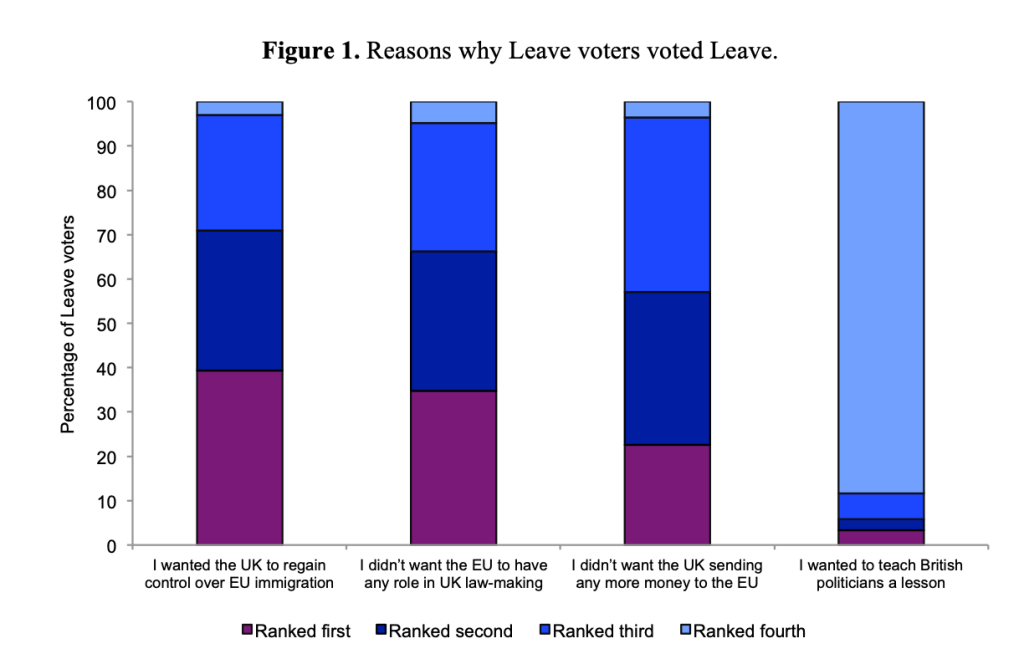
This summer, as protests spread across the country, Labour politicians are going out of their way to show they understand protesters’ concerns about mass immigration.
And sure, at this point, immigration is one of the many obvious (and literal) holes in government policy but isn’t some ignominious talking-point that no one goes near anymore: by now, the effects of importing hundreds of thousands of people year-on-year are being felt by everyone and their nan. Still though, the above indicates a stark change from even a few years ago.
The question is, why, specifically in Britain, is there the amount of “genuine concerns held by ordinary people who were neither thugs nor members of the far-Right?”
One of the main reasons for this is that, aside from immigration of course, the level of widespread governmental mismanagement, regardless of the party in No. 10, has been pretty much unprecedented. Over the course of the past half-century, elections have been fought consistently on similar issues that are never addressed. The national debt sits close to £3 trillion pounds, the number of people living in tragic conditions is growing increasingly and the UK economy is at one of its worst points in history. This is where we observe a fallacy in the government and electorate’s way of thinking which is symptomatic of the past fifty years: the faults listed above have been directly caused by the government, yet despite this, people seem to think that the answer to more government is more government. When in actual fact, we evidently need quite the opposite. Here’s an apt point made by the ex-Reform UK party chairman:
“Nvidia has a market capitalisation of $4.2 trillion, which is 15% greater than UK GDP.
HMRC alone has twice as many staff (68k) as Nvidia.
Let that sink in.”
The root point is that the government destroys prosperity and can’t create it, while businesses quite evidently can with much greater ease. But here in the UK, we tax the living daylights out of the small businesses that provide many of the important goods and services that this country needs. Consequently, the number of people leaving the country will increase while more and more foreigners come over. Actually, I’d better be careful:
Alas, the other main reason, aside from the political ignorance, would be the UK’s reliance on a fallible financial system i.e Fiat currency. As a result of being on a completely superficial currency, as every country in the world now is, the UK, along with a majority of countries, are facing huge piles of debt and constant price increases. Not to say that this would happen on a money-backed system, but it’s likely that the economic problems that the UK faces wouldn’t be anywhere near as profound. Also, without a fiat-based system, you wouldn’t have the ludicrous amounts of borrowing the government does each month, hence pushing prices up further.
So while the government has grown and grown and grown, without relent really since the end of the second world war, more and more often has it let us down. Which brings us up to today, where Britain faces seemingly unending and unfixable problems. I said some months back that “Most Western liberal democracies are facing an inflection point right now - if you haven’t noticed. They face the question that has been chugging along unrelentingly in recent decades but only now has it arrived at its stop and awaits for its passengers to board. Generally, it goes like this: Do you believe that your vote really matters? And - to go one step further: Can you vote your way out of the crises that your country faces?”. More and more of us are coming to terms with these two questions. To build on those two conundrums, I add one more, slightly darker one, to the mix: How much longer can Britain go on like this?

Comments